Video Walls
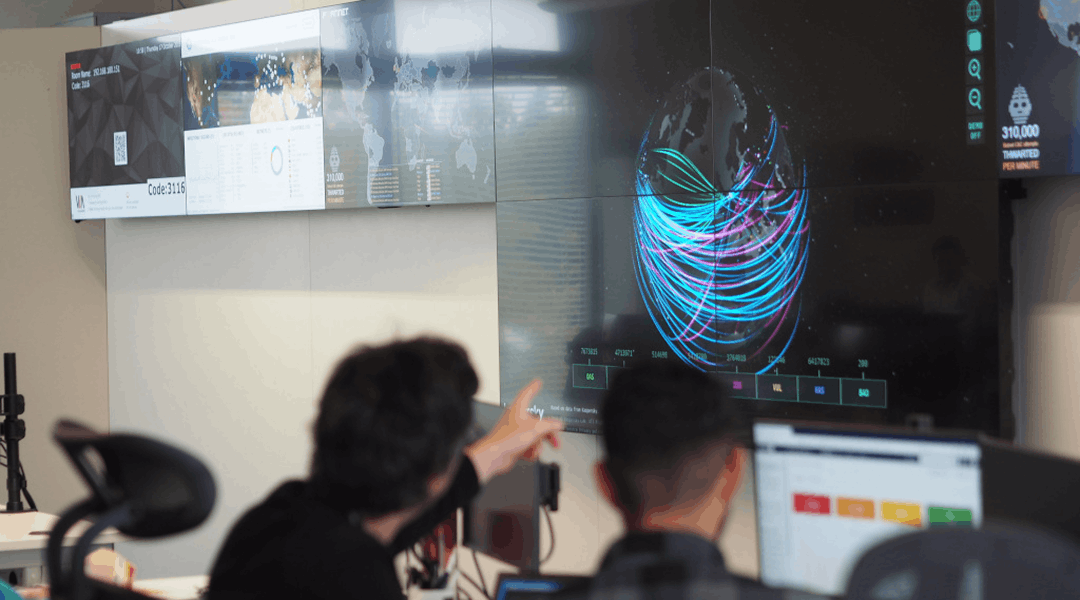
Video Walls provide large-scale, high-impact visual displays by combining multiple screens into a single seamless viewing surface.
They are widely used in retail environments, corporate buildings, control rooms, sports stadiums, event venues, and public spaces to deliver dynamic content, real-time information, and immersive visual experiences. Modern video wall systems are centrally managed, scalable, and designed for 24/7 operation.
What is a Video Wall?
A Video Wall is a multi-screen display system that uses a collection of commercial monitors or LED panels arranged in a grid to form one unified display surface.
Content is controlled by a video wall processor or controller, which manages playback, layout, resolution, and synchronisation across all panels. This enables organisations to present large-format advertising, live video feeds, dashboards, or interactive content with exceptional brightness and clarity
Video walls can be built using LCD panels, LED tiles, or projection systems depending on the environment, viewing distance, and budget. They are designed for high reliability, narrow bezels, and consistent colour performance across large visual canvases.
Key Benefits of Video Walls
- High-impact visual presentation for branding and advertising
- Seamless large-format viewing with minimal bezels
- Scalable layouts and flexible screen configurations
- Ideal for real-time data, live feeds, and multi-source content
- Suitable for 24/7 environments such as control rooms
- Centralised content management across multiple locations
- Ultra-high brightness and colour uniformity
- Long lifespan and low maintenance requirements
How Video Walls Work
A Video Wall system consists of three essential components:

Display Panels
LCD or LED modules arranged in a grid.

Video Wall Controller
Hardware or software that processes and synchronises content across all screens.

Content Management System (CMS)
A platform used to create, schedule, and publish content from a central dashboard.
Content is uploaded into the CMS, assigned to layouts or zones, and then distributed to the video wall controller, which renders it across the entire display surface. Administrators can switch between layouts, control inputs, and monitor device health remotely, making the system well suited for multi-site estates and mission-critical environments.
Use Cases for
Video Walls
- Digital advertising and brand showcases
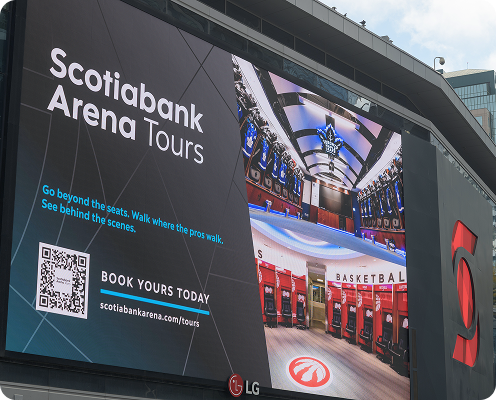
- Stadium and arena event displays
- Control rooms and security operations centres
- Retail flagship stores and shopping centres
- Conference centres and exhibition halls
- Transport hubs (airports, train stations)
- Corporate lobbies and reception areas
- Hospitality and entertainment venues

Hardware and Installation Considerations
Professional installation is crucial for performance and longevity. Considerations include:
- Structural wall assessment and secure mounting frames
- Thermal management and ventilation
- Cable routing and power distribution
- Network connectivity for CMS control
- Viewing distance and display pitch (especially for LED)
- Room lighting and ambient brightness
- Ongoing calibration and maintenance
Correct hardware selection and installation prevent visual inconsistencies and ensure reliable long-term operation.
Why choose entrustIT for your
Video Wall Solutions?
We provide end-to-end Video Wall solutions, from technology consultancy and system design through to professional installation, calibration, and ongoing support.
Our team helps you select the right hardware—LED, LCD, or projection—based on your environment and objectives, and we configure the content management platform, monitoring tools, and controls needed for reliable day-to-day operation. With cloud-based management options, multi-site deployment expertise, and UK-wide installation and maintenance services, we deliver Video Wall systems that are engineered for performance, consistency, and long-term commercial impact.
FAQs
Q: What is a Video Wall used for?
Q: Are LED or LCD video walls better?
Q: Can video walls be controlled remotely?
Q: Do you provide installation and support?
Q: How large can a video wall be?
CASE STUDY
Gamma Communications PLC
Gamma Communications PLC is a leading UK-based provider of unified communications and connectivity services, serving businesses, public sector organisations, and channel partners.
View Study